⭐ STAR CERTIFIED TEST-ONLY STATION
📍 9345 Jellico Ave Unit B, Hesperia, CA 92345 ⏰ Mon-Sat: 8:00 AM - 5:00 PM 📞 (760) 659-3455

Automotive Smog Control News & In-Depth Guides

Stay informed on California emissions standards, Bureau of Automotive Repair (BAR) regulations, diesel testing rules, OBD-II diagnostic drive cycles, and consumer assistance programs.

California Smog Check Program 2026: The Comprehensive Vehicle Owner’s Guide to Testing, Exemptions, and STAR Requirements

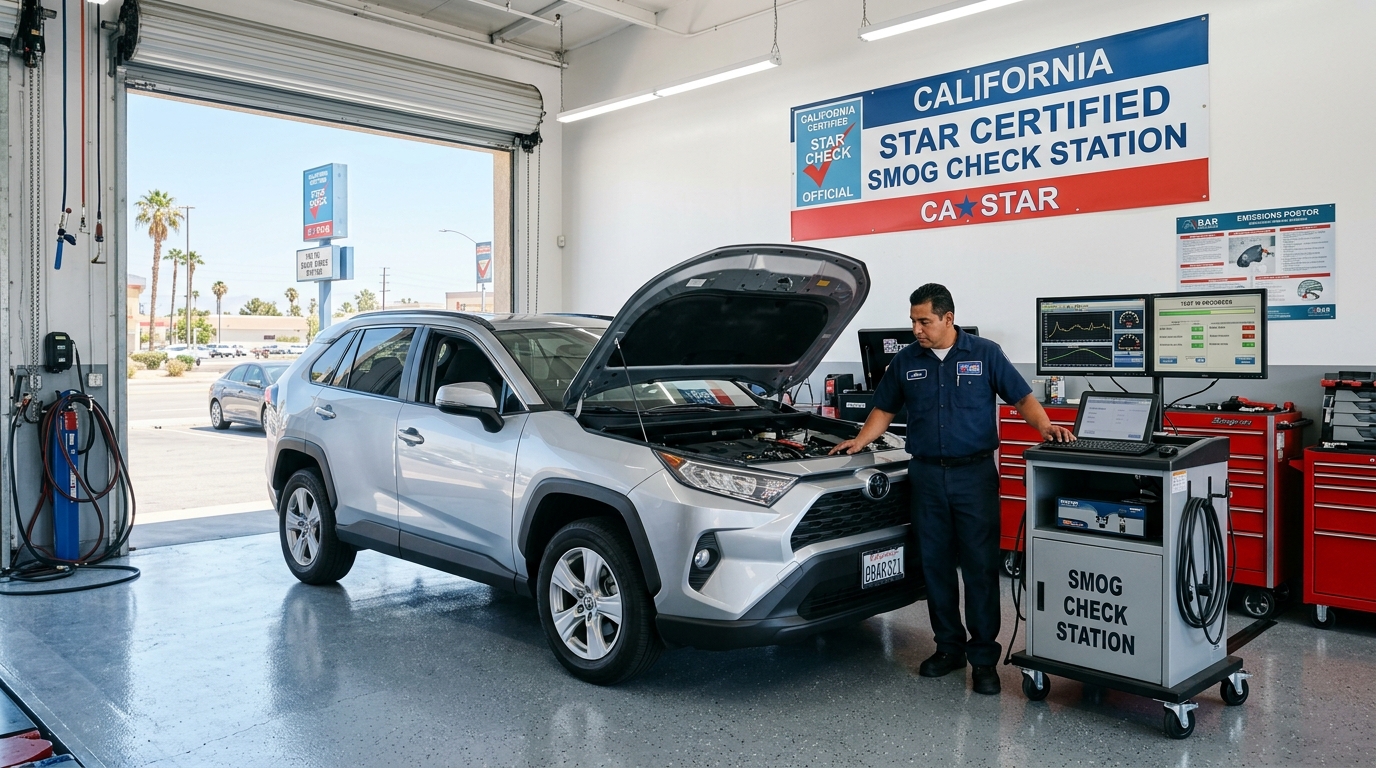
California STAR certified smog inspection station bay in Hesperia

California operates the most comprehensive vehicle emissions control framework in the United States. Administered by the California Bureau of Automotive Repair (BAR) within the Department of Consumer Affairs, the Smog Check Program is designed to remove millions of tons of ozone precursors, nitrogen oxides (NOx), fine particulates, and unburned hydrocarbons from the air Californians breathe every day.

For vehicle owners throughout San Bernardino County and the High Desert, understanding the intricacies of state requirements can mean the difference between an effortless 15-minute renewal and costly registration delays. This guide provides a definitive overview of current regulations, testing cycles, and station certifications.

Which Vehicles Require a Smog Check in California?

Under California Health and Safety Code Section 44011, emissions testing is required under three primary legal circumstances:

  • Biennial Registration Renewal: Every two years, vehicles registered in designated smog inspection counties (including San Bernardino County) must obtain a passing smog certificate to receive their current annual DMV registration tags.
  • Change of Ownership: When a vehicle is sold or transferred between private parties, the seller is legally responsible for providing a passing smog certificate dated within the preceding 90 days.
  • Initial California Registration: Vehicles brought into California from another state or country must pass an initial emissions inspection before California license plates can be issued.

Important Exemption Details: Gasoline-powered vehicles eight model years old or newer are exempt from biennial smog checks (a smog abatement fee is assessed on your registration renewal instead). Classic motor vehicles manufactured in 1975 or earlier, dedicated Battery Electric Vehicles (BEVs), and motorcycles are completely exempt from the California Smog Check Program.

Understanding the STAR Program Mandate

When vehicle owners open their California DMV renewal notice and read "Smog Check Required at a STAR Station", questions often arise. The STAR program was created to identify high-performing stations that meet heightened quality, calibration, and anti-fraud benchmarks.

Vehicles are directed to STAR stations through two mechanisms:

  1. High Emitter Profile (HEP): Vehicles flagged by state statistical software as possessing a higher probability of tailpipe or OBD-II component failure based on make, age, engine family, and accumulated odometer reading.
  2. Random Sampling: A statutorily mandated percentage of California vehicles are chosen at random each year to assess real-world fleet emissions reliability across all vehicle classes.

The Test-Only Advantage

Within the STAR ecosystem, stations fall into two categories: Test-and-Repair and STAR Test-Only. By law, a STAR Test-Only Center like Main St Smog Star Station cannot perform repairs or sell replacement parts. This distinction provides motorists with total peace of mind: there is zero financial incentive for a technician to fail your vehicle to sell you an unnecessary oxygen sensor, catalytic converter, or evaporative purge solenoid.
Diesel Vehicle Smog Checks in California: Weight Thresholds, DPF Systems, and Opacity Standards Explained

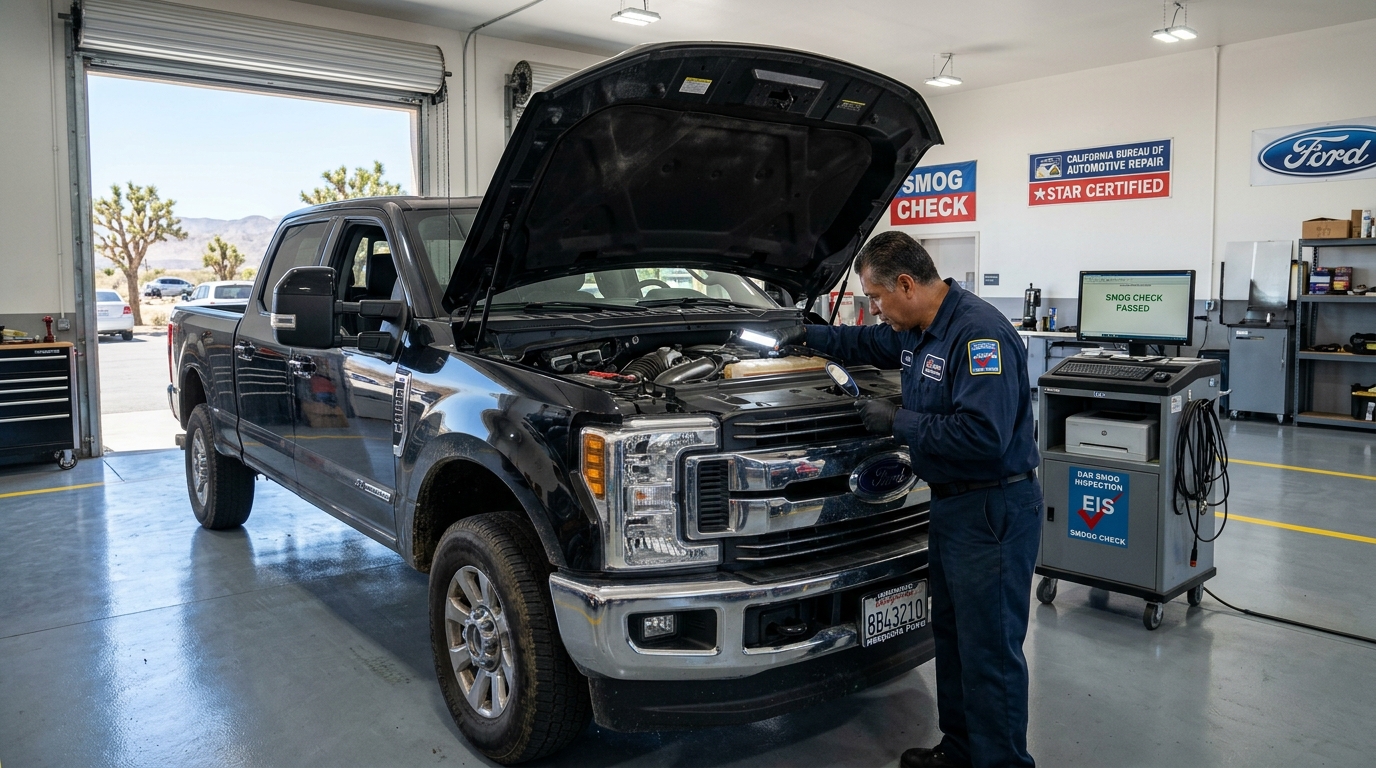
Diesel truck undergoing California emissions inspection in Hesperia

Diesel-powered passenger vehicles and light-to-medium duty trucks form the backbone of transportation in Southern California’s High Desert. From ranching and commercial hauling to off-road towing along the Cajon Pass, heavy-duty pickups like the Ford F-250/F-350 Powerstroke, Chevrolet Silverado / GMC Sierra 2500/3500 Duramax, and RAM 2500/3500 Cummins are everywhere.

However, California’s diesel smog inspection regulations are among the strictest in the world. Enacted under Assembly Bill 1488, the diesel smog check rules apply to all 1998 and newer diesel vehicles with a Gross Vehicle Weight Rating (GVWR) of up to 14,000 lbs.

The Three Pillars of a California Diesel Smog Inspection

Unlike older dynamometer-driven gasoline tests, a California diesel smog check relies on three comprehensive evaluation phases conducted by our certified technicians:

1. The Comprehensive Visual Inspection

The technician inspects the engine compartment and exhaust undercarriage to verify that all factory-installed emissions equipment is present, connected, and unmodified:

  • Diesel Oxidation Catalyst (DOC): Oxidizes carbon monoxide and unburnt fuel.
  • Diesel Particulate Filter (DPF): Traps soot and particulate matter. Any aftermarket DPF delete pipes or straight-pipes result in an immediate visual failure.
  • Selective Catalytic Reduction (SCR) & DEF Fluid: Checks that the Diesel Exhaust Fluid injection system and tank are intact and operating without warning messages.
  • Exhaust Gas Recirculation (EGR) Cooler & Valve: Verifies the system that recirculates inert exhaust gas into intake air to suppress combustion temperatures and reduce NOx.
  • CARB Executive Order (EO) Verification: Any aftermarket air intakes, cold-air boxes, turbochargers, or intercoolers must possess a valid, verifiable California Air Resources Board (CARB) Executive Order number stamped or stickered directly on the component.

2. Functional OBD-II Diagnostic Evaluation

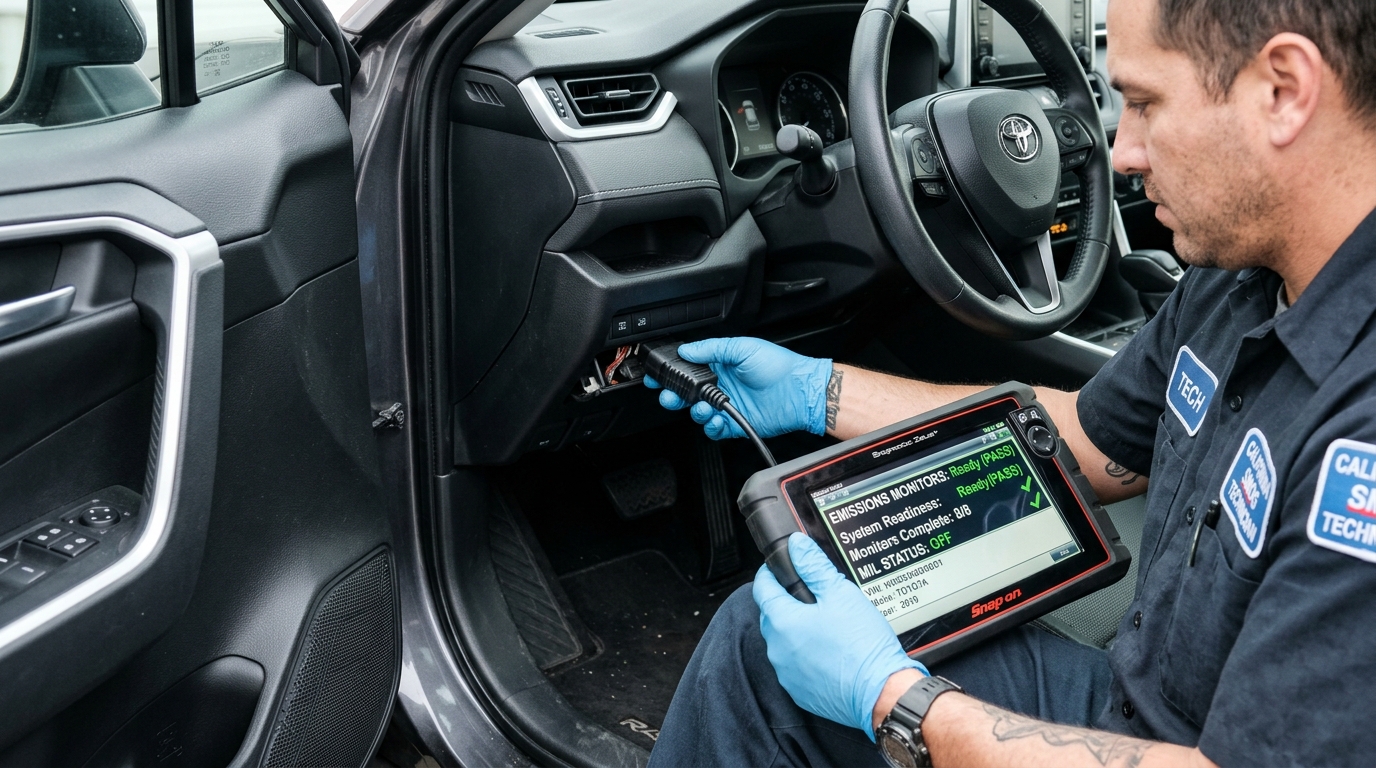
Using the BAR-OIS computerized diagnostic interface, the technician connects to the vehicle’s diagnostic port underneath the dashboard. The system reads:

  • Absence of diagnostic trouble codes (DTCs) and confirmation that the Check Engine Light (MIL) is fully functional and turned off.
  • Completion of required OBD-II Readiness Monitors (including PM Filter, EGR, and Catalyst monitors).
  • Verification that the vehicle’s engine computer calibration identification (Cal ID) and calibration verification number (CVN) match factory-approved software files (detecting non-compliant custom software tuning).

3. Snap-Throttle Smoke Opacity Test

The technician conducts the official BAR snap-acceleration smoke test. The engine is quickly revved from idle to approximately 2,500–3,000 RPM while observing tailpipe plume opacity. If visible black or blue smoke hangs in the air for longer than 3 continuous seconds, the vehicle fails the smoke test.

Pre-Test Tip for Diesel Owners: Ensure your engine is fully warmed to normal operating temperature before arriving at the station. Perform a highway drive beforehand to allow your DPF system to complete an active regeneration cycle, clearing residual soot.

Demystifying Check Engine Lights and OBD-II Monitor Readiness: How to Avoid an Automatic Smog Check Failure

OBD-II diagnostic scan tool connected to car for California smog test

Few dashboard indicators create as much dread for California drivers as the small amber outline of an engine. Whether it is illuminated steadily or flashing, the Malfunction Indicator Lamp (MIL), universally called the Check Engine Light, is the single most common cause of failed smog inspections across the state.

Understanding how the vehicle’s On-Board Diagnostic (OBD-II) system operates—and avoiding the classic mistake of clearing trouble codes right before pulling into a smog shop—can save you time, stress, and re-inspection trips.

The Automatic Failure Rule

Under California Bureau of Automotive Repair standards, an illuminated Check Engine Light during the smog inspection results in an automatic functional test failure. Even if the tailpipe produces zero measurable emissions and the vehicle runs smoothly, California law mandates that the vehicle cannot pass while an active emissions DTC is stored and triggering the MIL.

The "Quick Reset" Trap: Why Clearing Codes Backfires

Many well-meaning drivers purchase an inexpensive handheld OBD-II code reader or disconnect their vehicle’s negative battery terminal for 10 minutes right before heading to a smog station. While this turns off the Check Engine Light temporarily, it triggers a different obstacle: OBD-II Readiness Monitor Incompletion.

When battery power is cut or codes are erased, the vehicle’s powertrain control module (PCM) wipes its diagnostic memory. The car resets its internal testing checklists (readiness monitors) from "Ready" to "Not Ready". These monitors verify:

  • Catalytic Converter Efficiency: Verifying upstream vs downstream O2 sensor oxygen storage.
  • Evaporative Emissions (EVAP): Checking for fuel vapor leaks in the gas tank and charcoal canister.
  • Oxygen Sensors (O2): Monitoring heater circuit speed and voltage response.
  • EGR / Variable Valve Timing (VVT): Confirming correct gas recirculation rates.
  • Heated Catalyst & Secondary Air Injection (if equipped).

California Monitor Rules: For gasoline vehicles year 2000 and newer, California allows only one monitor to be incomplete: the EVAP monitor. All other emissions monitors (Catalyst, O2, EGR, etc.) must show Ready or the state BAR-OIS computer system will automatically reject the inspection as incomplete.

The Universal OBD-II Drive Cycle

To set your monitors back to "Ready" after a battery disconnect or repair, you must complete an OBD-II Drive Cycle. While specific procedures vary slightly by automaker (e.g., Ford, GM, Toyota, Honda), the universal drive cycle outlined below works for 90% of passenger vehicles:

  1. Cold Start: Start the engine after it has cooled for at least 6 hours, allowing coolant to match ambient air temperature (below 122°F). Let the engine idle in park/neutral with the AC and defroster off for 2.5 minutes.
  2. City Driving: Accelerate gently to 35 mph. Drive in typical stop-and-go city traffic for 10 to 15 minutes, coming to complete stops.
  3. Highway Cruise: Enter a freeway or highway. Accelerate smoothly to 55–60 mph. Maintain this steady speed for 15 to 20 minutes without using cruise control. Avoid erratic throttle movements.
  4. Deceleration Coast: Take your foot off the accelerator and allow the vehicle to coast down from 55 mph to 20 mph without pressing the brake or clutch pedal. This allows the computer to run the deceleration fuel cut-off and EVAP purge tests.
  5. Final Idle: Stop safely and allow the vehicle to idle in gear (drive for automatics, neutral for manuals) for 2 minutes.

Following this sequence over two or three days of normal commuting will almost always set all necessary monitors, ensuring your vehicle is 100% prepared to pass its California smog inspection.

Moving to California: Step-by-Step Guide to Smog Inspection and DMV Registration for Out-of-State Vehicles

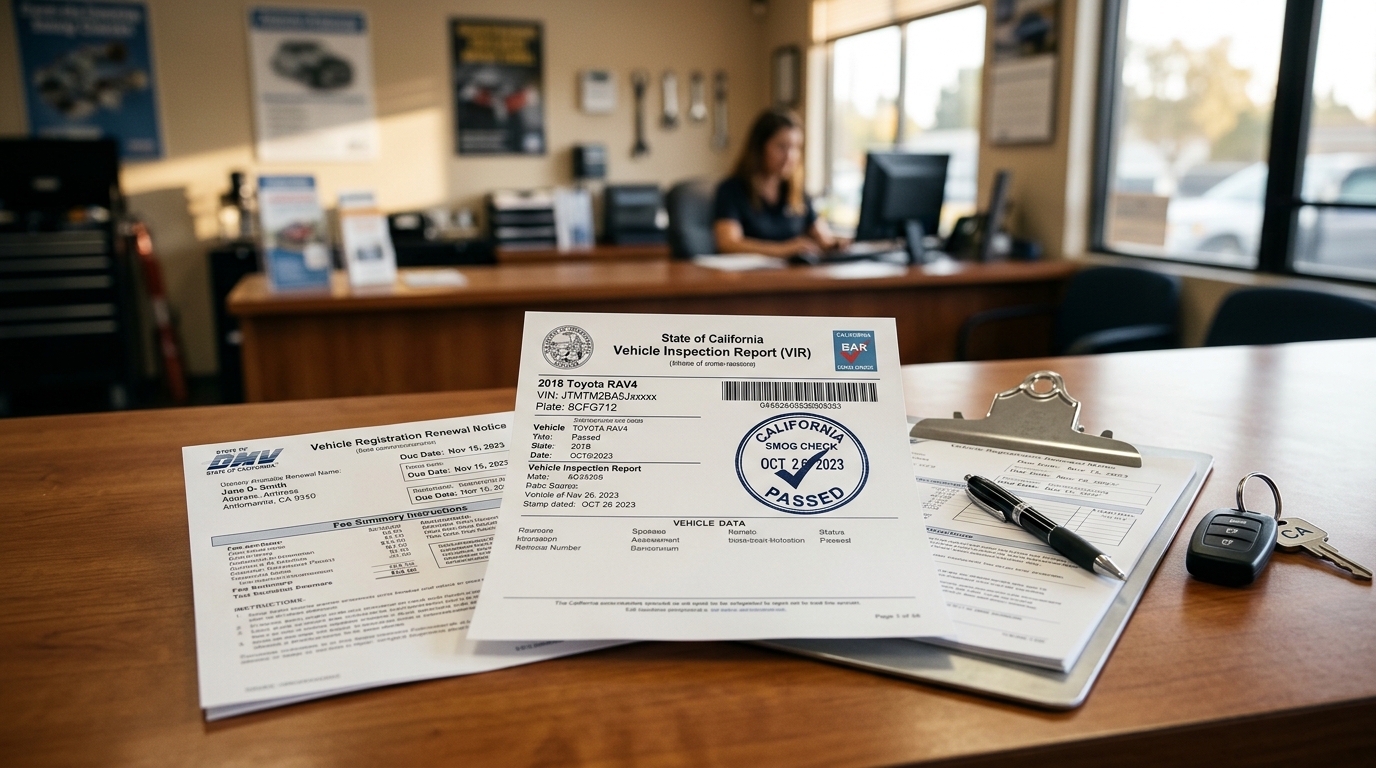
DMV vehicle registration renewal document and smog report

Every year, thousands of families relocate to Southern California’s Victor Valley, drawn by Hesperia's spacious homes, mountain views, and growing High Desert community. One of the first legal responsibilities confronting new residents is registering their vehicles with the California Department of Motor Vehicles (DMV).

Under California Vehicle Code (CVC) Section 4000.4, new residents must register their out-of-state vehicle within 20 days of establishing residency or accepting employment in California. Central to this process is obtaining a valid California Smog Inspection Certificate.

49-State (Federal EPA) vs. 50-State (CARB) Myth Debunked

A common misconception among newcomers is that a car purchased in another state (often referred to as a "49-state EPA" vehicle) cannot be registered in California.

The Truth: A previously registered, used motor vehicle from another state can be registered in California, provided it was not purchased by a California resident specifically to bypass emissions laws. As long as the vehicle's original federal emissions equipment is intact, functioning, and the vehicle passes the California smog test, California DMV will accept the vehicle and issue plates.

The Under-Hood VECI Label

Every vehicle features a Vehicle Emissions Control Information (VECI) label permanently adhered under the hood, on the radiator support, or strut tower. During your inspection at Main St Smog, our licensed technician inspects this label to determine:

  • Engine family identification code and displacement
  • Emissions certification standard (California CARB Tier, Federal EPA Tier, or 50-State)
  • Required emissions components (Catalyst, EGR, EVAP, O2 sensors)
  • Ignition timing parameters and vacuum routing schematics

The 4-Step Registration Process for New Residents

  1. Step 1: Get Your California Smog Check: Drive into Main St Smog Star Station at 9345 Jellico Ave Unit B in Hesperia. Bring your out-of-state vehicle registration card or title. We will conduct the initial California smog inspection and transmit your electronic certificate directly to the California DMV database.
  2. Step 2: Complete VIN Verification: Have your vehicle identification number (VIN) physically verified. This can be done at a DMV office, local AAA branch (for AAA members), or by a licensed vehicle verifier.
  3. Step 3: Complete DMV Application Reg 343: Fill out the Application for Title or Registration (Form REG 343) available online or at the local office.
  4. Step 4: Receive Your Plates and Tags: Present your out-of-state title, REG 343, VIN verification, and confirmation that your smog certificate is in the DMV system. Pay applicable registration fees and walk out with your California license plates and stickers!

Skip the DMV Line: If you are a member of the American Automobile Association (AAA), you can complete your out-of-state title transfer, VIN inspection, and license plate collection directly at the local High Desert AAA office, bypassing the state DMV entirely!

Hybrid and Alternative Fuel Vehicle Smog Inspections: Understanding California's Emissions Testing for High-Efficiency Cars

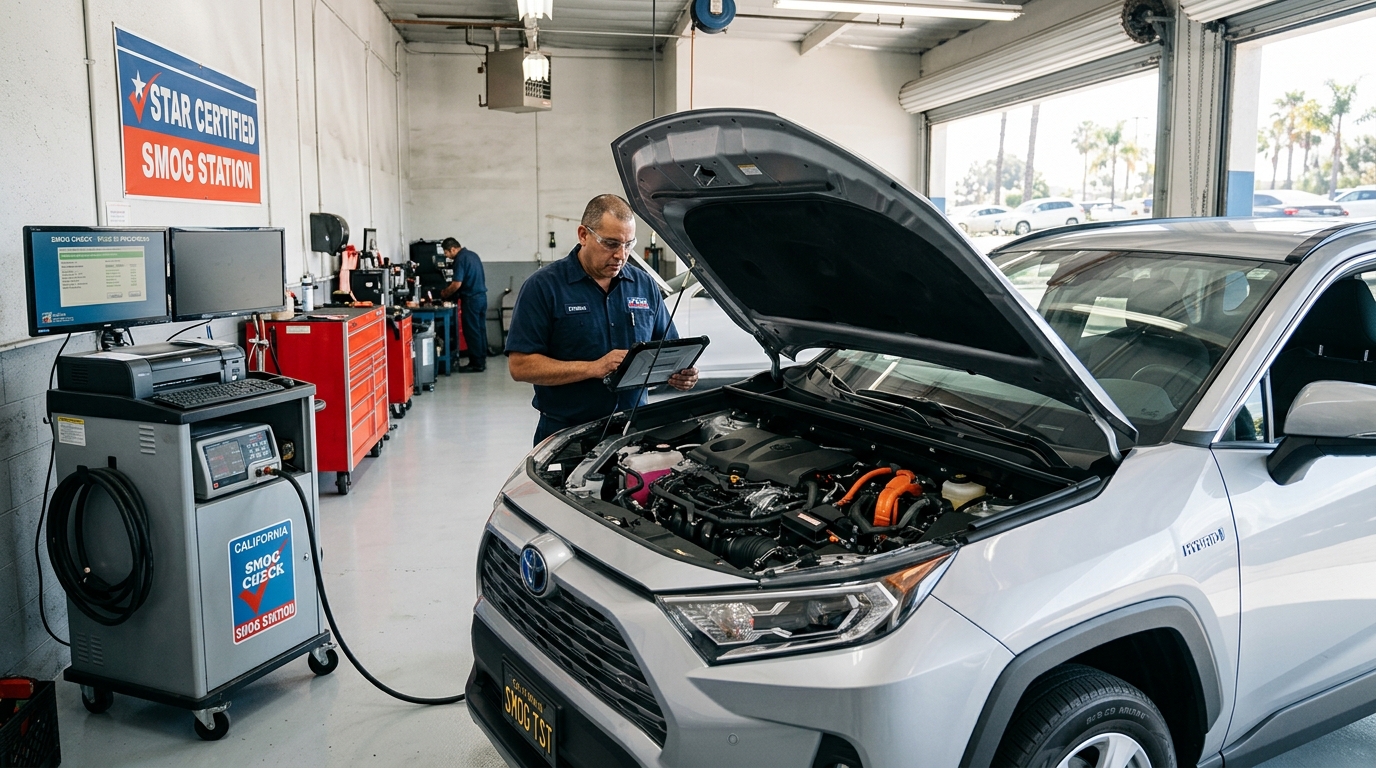
Hybrid vehicle undergoing California smog emissions test

With fluctuating gasoline prices and the long commutes common throughout Southern California and the Victor Valley, hybrid electric vehicles—led by models like the Toyota Prius, Camry Hybrid, RAV4 Hybrid, Honda Accord Hybrid, and Ford Escape Hybrid—have become ubiquitous on California roadways.

Because these vehicles achieve outstanding fuel economy and carry low emissions ratings (such as SULEV - Super Ultra Low Emission Vehicle), many owners assume they are permanently exempt from California smog inspections. However, state law specifies a different reality.

Why California Mandates Hybrid Smog Testing

In 2015, the California State Legislature passed Assembly Bill 2289, integrating hybrid gas-electric vehicles into the biennial Smog Check Program. While hybrids feature an electric battery pack and electric motor, they also contain an internal combustion gasoline engine (ICE) with standard emissions control hardware:

  • Exhaust catalytic converters that degrade over time from high mileage.
  • Evaporative emissions canisters and purge valves that can develop fuel vapor leaks.
  • Heated oxygen sensors and exhaust gas recirculation systems subject to carbon buildup.

Because a malfunctioning hybrid engine could emit excessive pollutants without triggering an immediate mechanical breakdown, regular biennial verification is essential to maintain regional air quality standards.

How Hybrid Smog Inspections Differ from Conventional Tests

Testing a hybrid presents a unique technical hurdle: under normal operating conditions, the hybrid powertrain management system automatically shuts off the gasoline engine whenever the vehicle comes to a stop.

To perform a valid California BAR-OIS inspection, our licensed technicians must activate the vehicle’s specialized Inspection / Maintenance (I/M) Diagnostic Mode. This factory test sequence keeps the gasoline internal combustion engine running continuously during the test, allowing our computerized diagnostic unit to communicate with the PCM, verify sensor output voltages, and inspect OBD-II emissions readiness.

Which Vehicles Are Exempt vs. Required?

  • Conventional Hybrids (HEVs): Required to undergo biennial smog checks once past the 8-model-year exemption window.
  • Plug-in Hybrids (PHEVs): Required to undergo biennial smog checks, as they utilize a gasoline engine for extended range.
  • Battery Electric Vehicles (BEVs): Completely 100% exempt (Tesla Model 3/Y, Chevy Bolt, Nissan Leaf, Ford Mustang Mach-E). No smog inspection is ever required.
  • Hydrogen Fuel Cell Vehicles (FCEVs): Completely 100% exempt (Toyota Mirai, Hyundai Nexo).

High Desert Desert Heat Considerations for Hybrids

In Hesperia and Victorville, summer ambient temperatures regularly surpass 100°F. Extreme heat places significant thermal stress on hybrid high-voltage battery cooling fan filters and evaporative emissions vapor seals. We recommend that hybrid owners clean their hybrid battery cooling intake vents and replace gas tank filler caps showing signs of dry-rot prior to testing.

Understanding 'Gross Polluters' in California: Causes, Penalties, and the Path to Re-Certification at a STAR Station

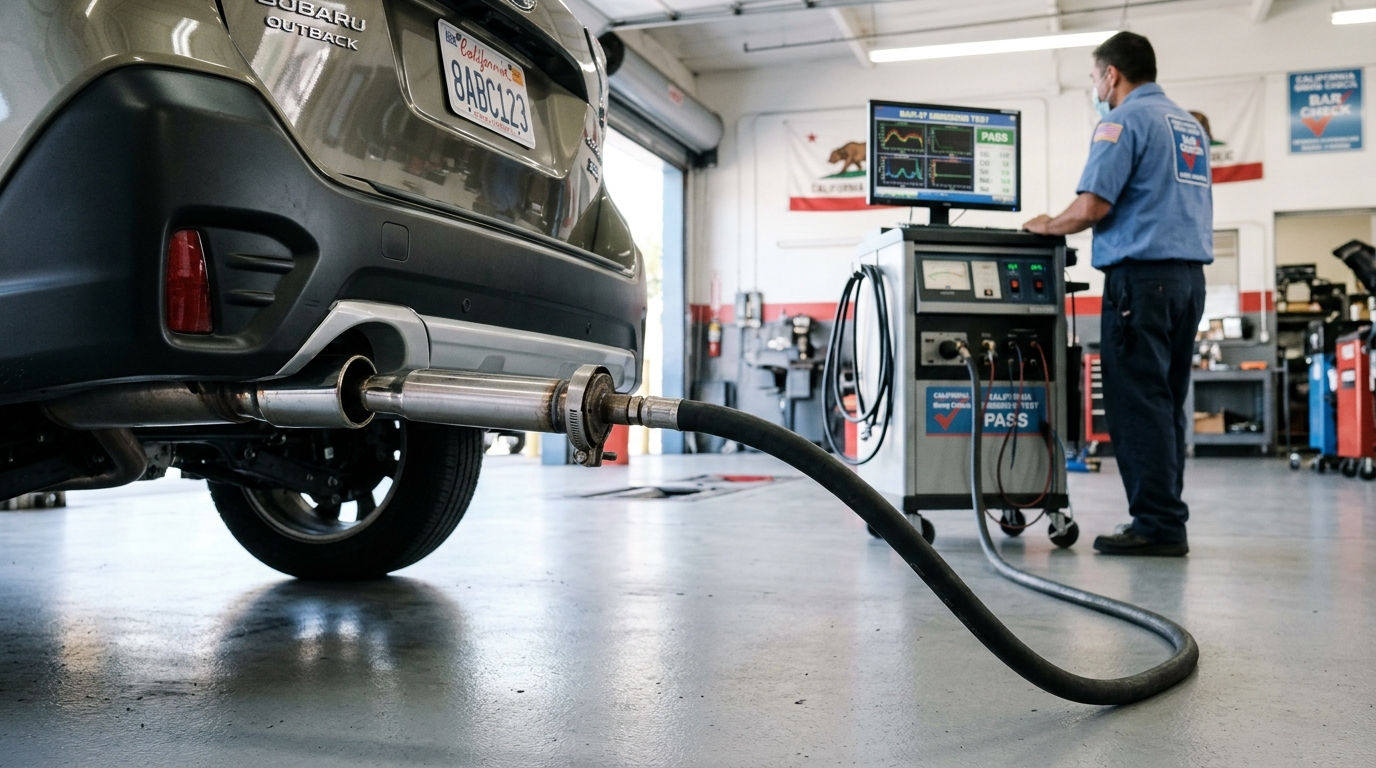
Tailpipe emissions probe and BAR analyzer testing exhaust

Receiving a smog check failure report labeled "Gross Polluter" can be an alarming experience for any motorist. It conjures images of heavy penalties, grounded vehicles, or astronomical repair estimates.

However, the Gross Polluter designation is a specific statutory classification established by the State of California with a clear, defined pathway back to compliance and clean vehicle operation.

What Legally Defines a Gross Polluter?

Under California Health and Safety Code Section 44081, a motor vehicle is classified as a Gross Polluter when its measured tailpipe emissions of Hydrocarbons (HC), Carbon Monoxide (CO), or Oxides of Nitrogen (NOx) exceed twice the maximum allowable threshold established for that specific vehicle weight, engine displacement, and model year.

Common mechanical causes of Gross Polluter tailpipe failure include:

  • Severe Catalyst Failure: A completely melted, contaminated, or missing catalytic converter substrate unable to reduce NOx or oxidize HC.
  • Extreme Fuel Richness: Defective mass air flow (MAF) sensors, leaking fuel injectors, or a stuck fuel pressure regulator delivering excess fuel that cannot fully burn.
  • EGR System Inoperability: Blocked exhaust gas recirculation passages causing combustion temperatures to soar above 2,500°F, generating massive quantities of toxic NOx emissions.
  • Ignition Misfires: Worn spark plugs, faulty coil packs, or burnt valves allowing raw unburned fuel to dump directly into the exhaust manifold.

Why Only a STAR Test-Only Station Can Clear Your Title

Once a vehicle is officially branded a Gross Polluter in the state’s central database in Sacramento, California law restricts who can perform subsequent testing. Standard smog shops cannot certify a Gross Polluter.

The vehicle must undergo all subsequent emissions re-inspections exclusively at a state-licensed STAR Test-Only Center like Main St Smog Star Station. Our certified station possesses the specialized calibration standards required to verify that emissions levels have returned safely beneath normal state compliance limits.

California Consumer Assistance Program (CAP): Financial Relief

If your vehicle failed as a Gross Polluter and you are concerned about repair costs, you may qualify for state financial assistance through the California Bureau of Automotive Repair Consumer Assistance Program (CAP):

  • Repair Assistance Option: Qualified low-income consumers whose household income falls at or below 225% of the Federal Poverty Guidelines may receive up to $1,200 in state-funded emissions-related diagnostics and repairs performed at an authorized STAR Test-and-Repair station.
  • Vehicle Retirement Option: If repairing the vehicle is economically impractical, CAP offers up to $1,500 to eligible motorists to voluntarily retire and scrap their high-emitting vehicle at an authorized dismantler.

Once your vehicle’s repairs are completed, bring your repair receipts and vehicle to Main St Smog Star Station. We will perform the official STAR re-certification, transmitting your passing results electronically to the DMV to clear your registration immediately.